A Taste of Enlightenment
Dear Friends,
Forty-five years of Zen practice has changed and transformed my life. In honor of my Zen teachers — Sr. Elaine Macinnes, OLM, Sr. Sonia Punzalan, RC and Kubota Jiun Roshi — I have gathered the articles I’ve written for the newsletter of our Zen community, Bahay Dalangin (House of Prayer). Entitled A Taste of Enlightenment: Thoughts and Reflections on Zen Practice, I have made it available as a free ebook. For those interested you may download it from this link:
A Taste of Enlightenment: Thoughts and Reflections on Zen Practice
With gratitude,
Matt
2023 Christmas Letter
This year was one of those years when a large number of family and friends visited us. We are thankful and deeply grateful.
The year started with a visit to SM, Baguio. It has been years since Matthew visited a mall. He was so surprised to see so many changes. Of course, we took a souvenir shot!

Sometime at the start of the year, too, Matthew gathered the articles he has written for the newsletter of the Zen community we are blessed to be part of – Bahay Dalangin. It is now available as a free ebook download from this link:
A Taste of Enlightenment: Thoughts and Reflections on Zen Practice

With the presence of our beloved Tita Sonie and Tito Freddie from California, we were treated to a unique Valentine’s Day surprise! We also appreciate Tita Mita, who accompanied them and treated us to pizza.
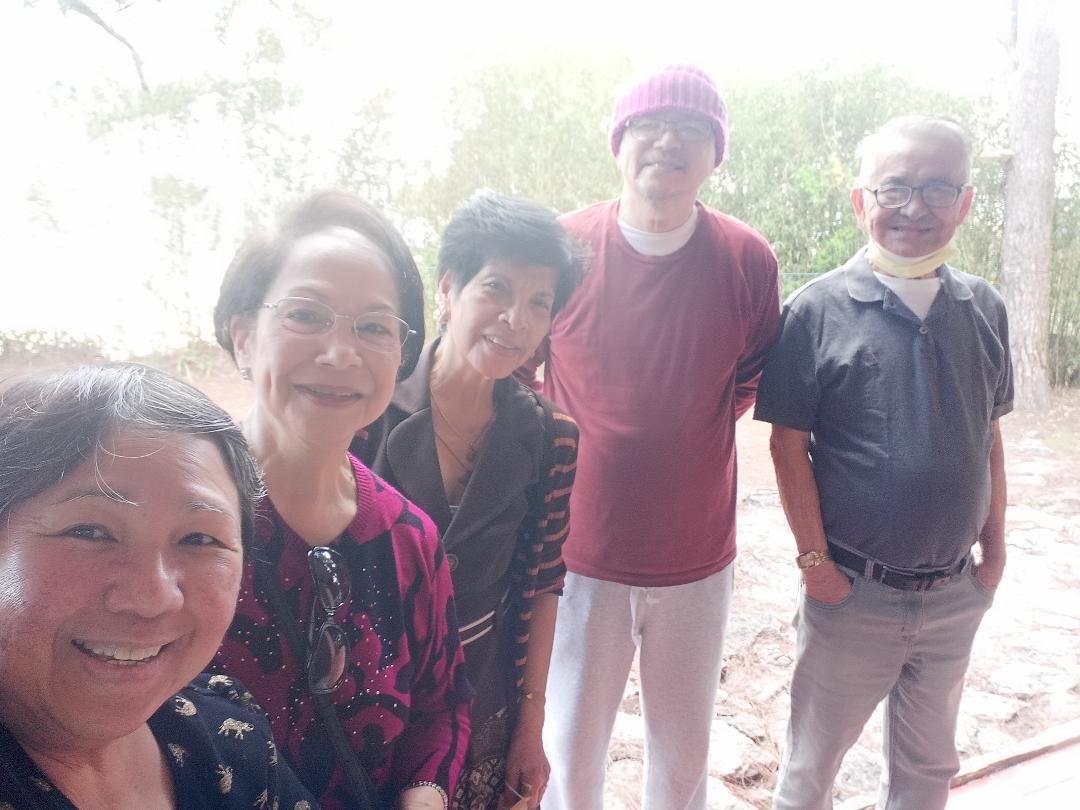
Three days after Tita Sonie’s visit, our dear Ate Genie dropped by to visit us. She’s such a busy person, and we appreciate it that she took the time to be with us.

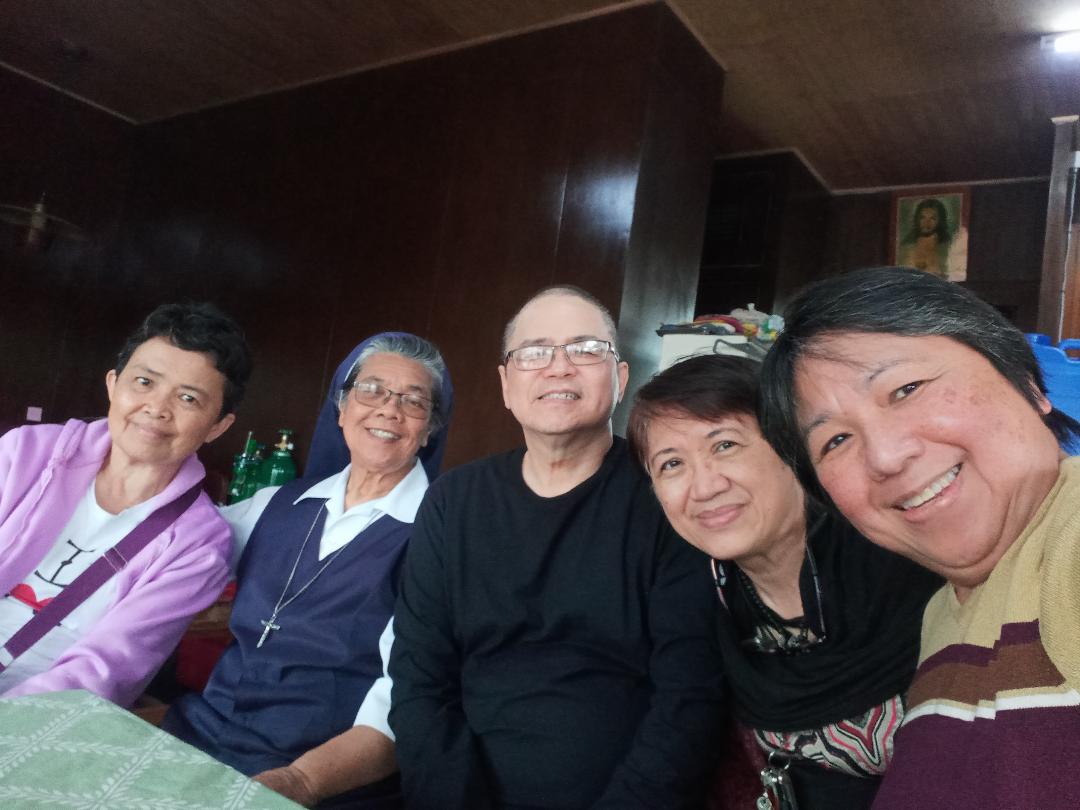
Our close friend, Sr. Marijo had the rare opportunity to visit Baguio since she is now based in Bulacan. And of course, she did not pass up the chance to visit us. It was such a fun-filled time together with Sr. Marijo, Flor, and Nena, how we wished the day would not end!
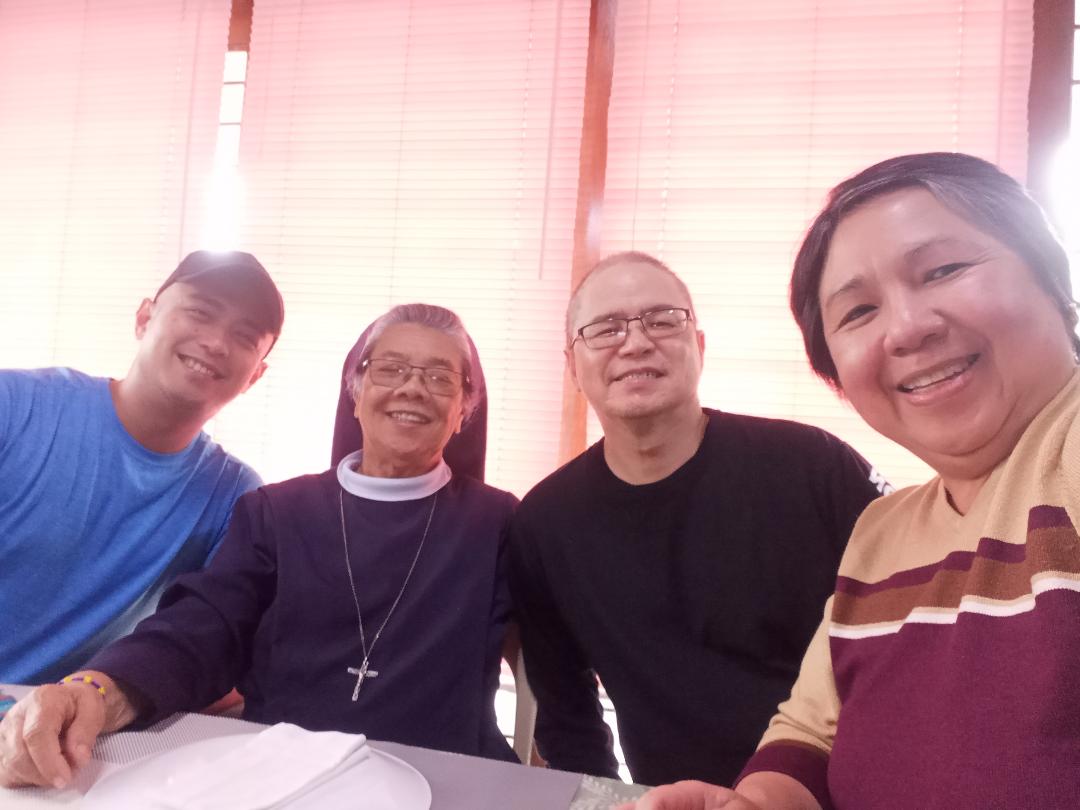
While still in Baguio, Sr. Marijo came back with her nephew, Boods, who gave us a very relaxing therapy session. It felt good!
Imagine my delight when my close friends, Lolit and Tess, went up to Baguio for an unplanned visit! I have been wanting to see them for a long time – a wish fulfilled!

Rissa was my grade school chum at St. Theresa’s College. It’s been over twenty years since I last saw her! I was extremely happy to see her with her husband, Rene, and her sister, Reng!

Sometime in the middle of the year, we were thankful that Matthew was getting stronger. He was regularly able to do some light walking for exercise, something that he has not done in years.
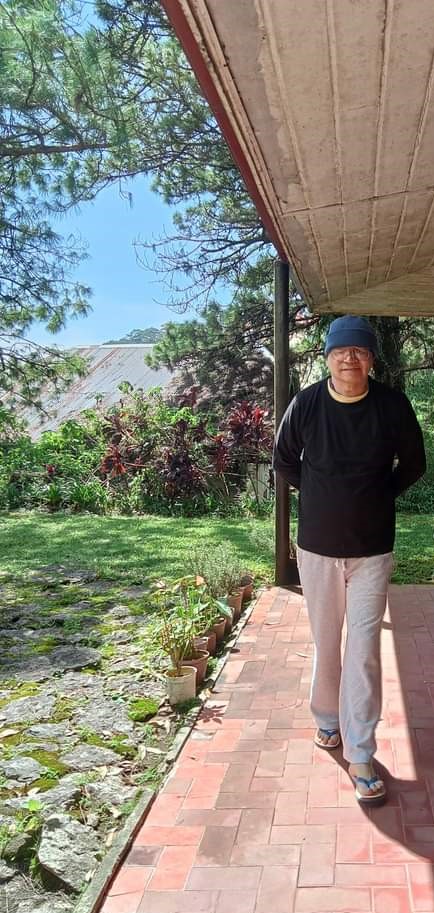
Dra. Chona is our angel. She takes care of us, and we are eternally grateful for her loving kindness. Once again, she came over to give us our annual flu vaccine. Thank you!

Helen, Pia, Auring, Claire, and Gene came to visit after Matthew’s birthday. Matthew was truly moved by their presence because they were like family to him. They carried a ton of stories, laughter, and delicious food. We were full in our hearts and bellies.

Ricky and Corito always light up our home with their presence! Matthew always looks forward to the times that he spends with Ricky. Being with Ricky and Corito is being with family!

Whenever Jun comes to the Philippines, it is always a pleasure to see him. Jun and Matthew have known each other since 1978; that’s more than half of their lives! Although for a while they lost touch, Sr. Marijo brought them together several years ago.

Joy is a friend and a dear sister-in-Christ. We are extremely grateful for all your help. May the good Lord reward you for all your kindness.
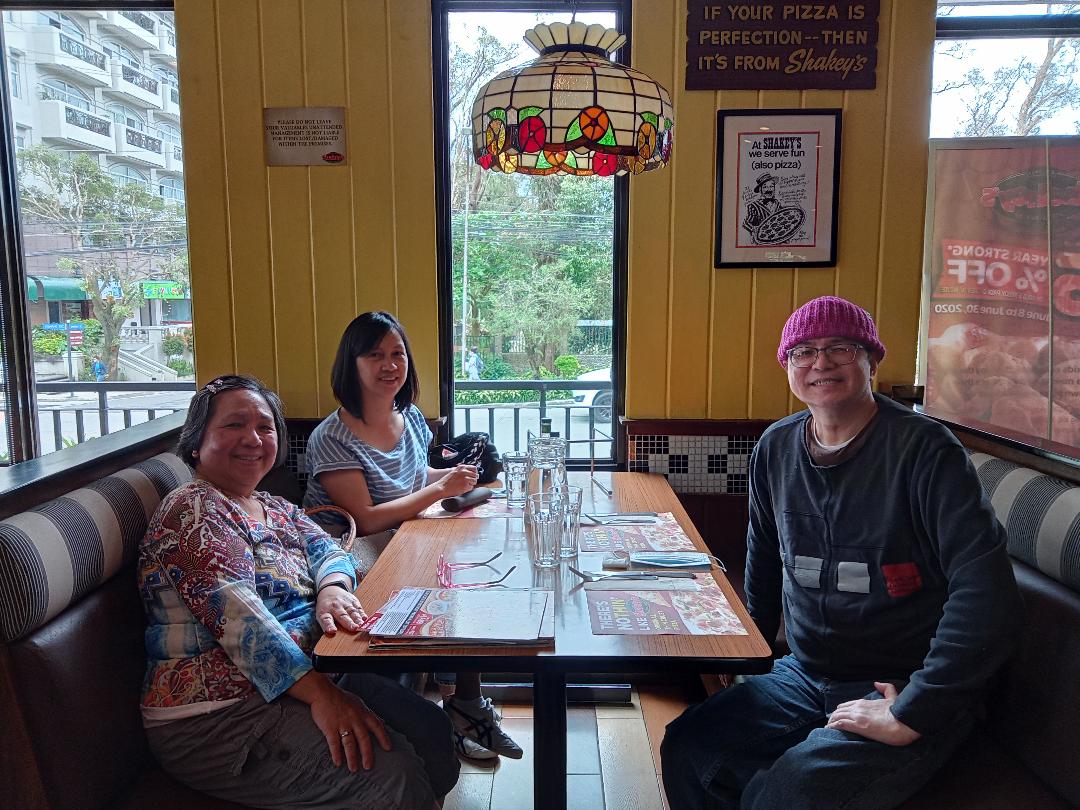
Thank you, Tita Teri and Tita Lety, for the yummy lunch and for your visit. We had a great time and really enjoyed hearing your stories. We’re hoping to see you again soon.
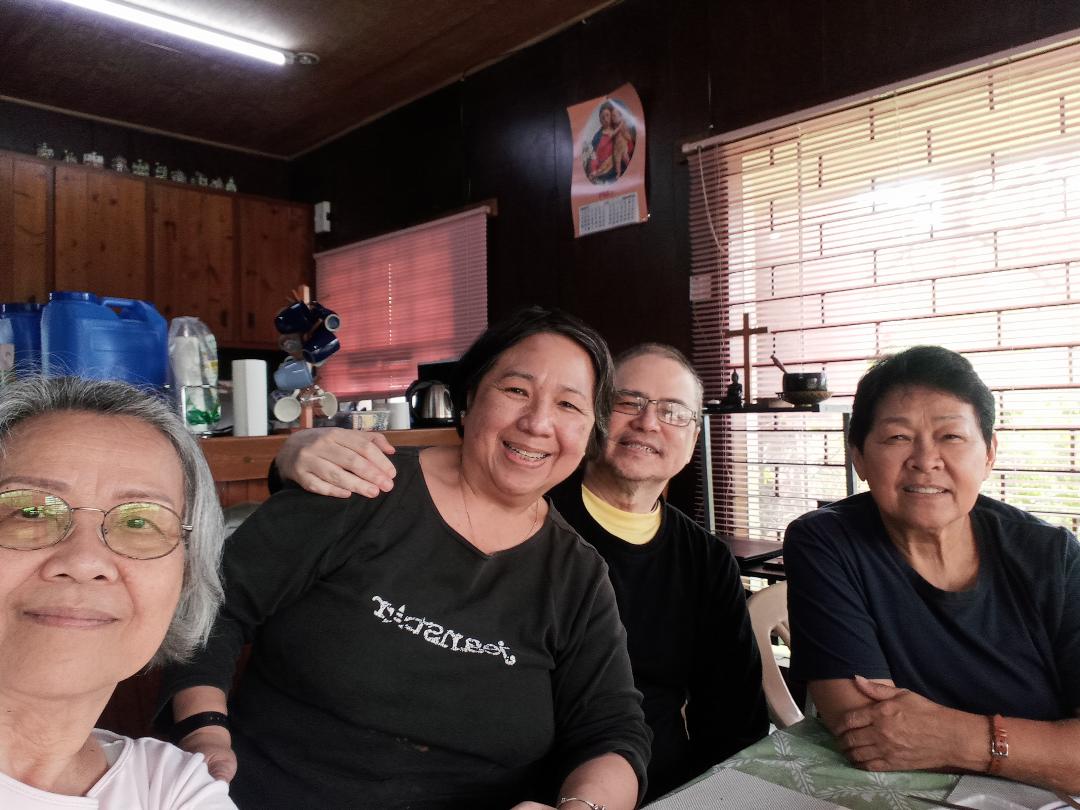
Last October, we had a big scare. Matthew was hospitalized and was diagnosed with a heart ailment. We’ve now made some adjustments in our lifestyle and eating habits because of this, and thank God Matthew is responding well to the medications and the changes we have made. Matthew took a break from writing for a while, something he loved to do, to give himself more time for his recovery. As of this writing, Matthew’s health has significantly improved, by God’s grace. God is good!

Finally, we cannot end this letter without mentioning our blog. Now in its fifteenth year, we have grown to have 440 followers with 550,917 hits. As our cybercommunity keeps growing in numbers, we never expected this blog to continue to touch so many people. Thank you for allowing us to share our lives with you.
From our family to yours, Merry Christmas. We look forward to a more joyful, healthy, and peaceful 2024.
~ Matthew and Jojang
The Fires That Burn: The Life and Work of Sr. Elaine MacInnes
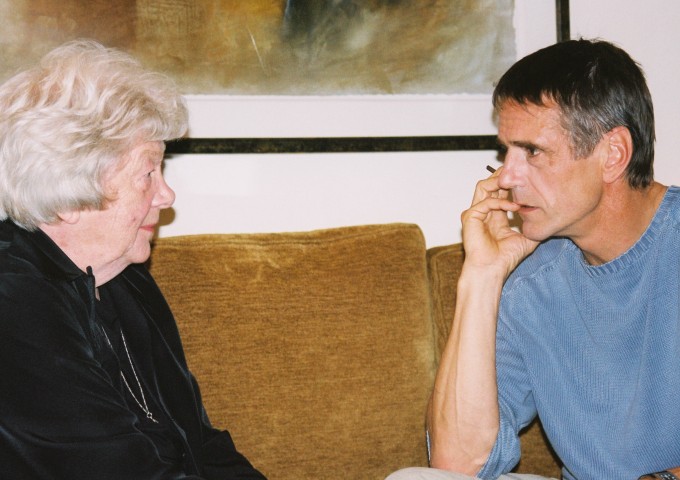
Spirituality is what you do with those fires that burn within you.
Sr. Elaine MacInnes
Sr. Elaine MacInnes – professional musician, Roman Catholic nun, Zen master and prison activist – is one of the most extraordinary women that I ever met in my life. She was my first Zen meditation teacher, who played a pivotal part in my life. Introduced to us by a dear friend of ours, Sr. Marie Jose Garcia, I first met her sometime in 1978.
Based in Manila, despite her busy schedule, she regularly took the time to travel to Baguio to conduct Zen retreats for our small group of mostly young college students. A woman with a generous heart and a gentle spirit, it was a joy to be with her.
This documentary, The Fires That Burn Within, is the story of her life. For those of us who are interested, please click the link below to watch the film:
— Matt
All in This Breath
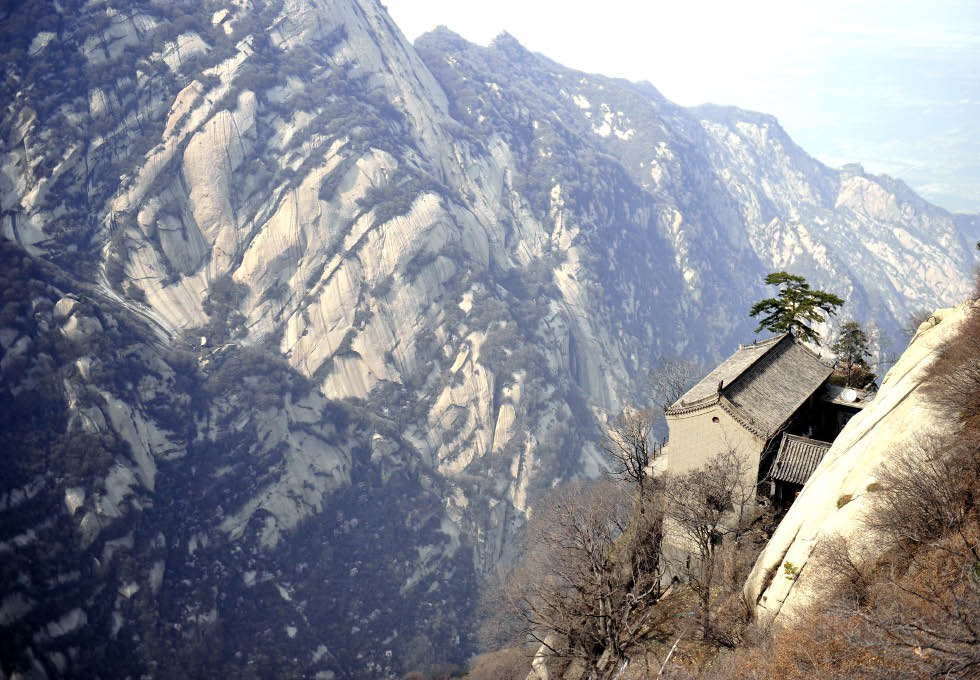
Ten thousand things
All in this breath
Grasping hold of emptiness
There’s nothing to say
— A Hermit of the Zhongnan Mountains
Note: The Zhongnan Mountains in China have been the home of Taoist and Buddhist hermits for 2200 years.
Mountain Treasures
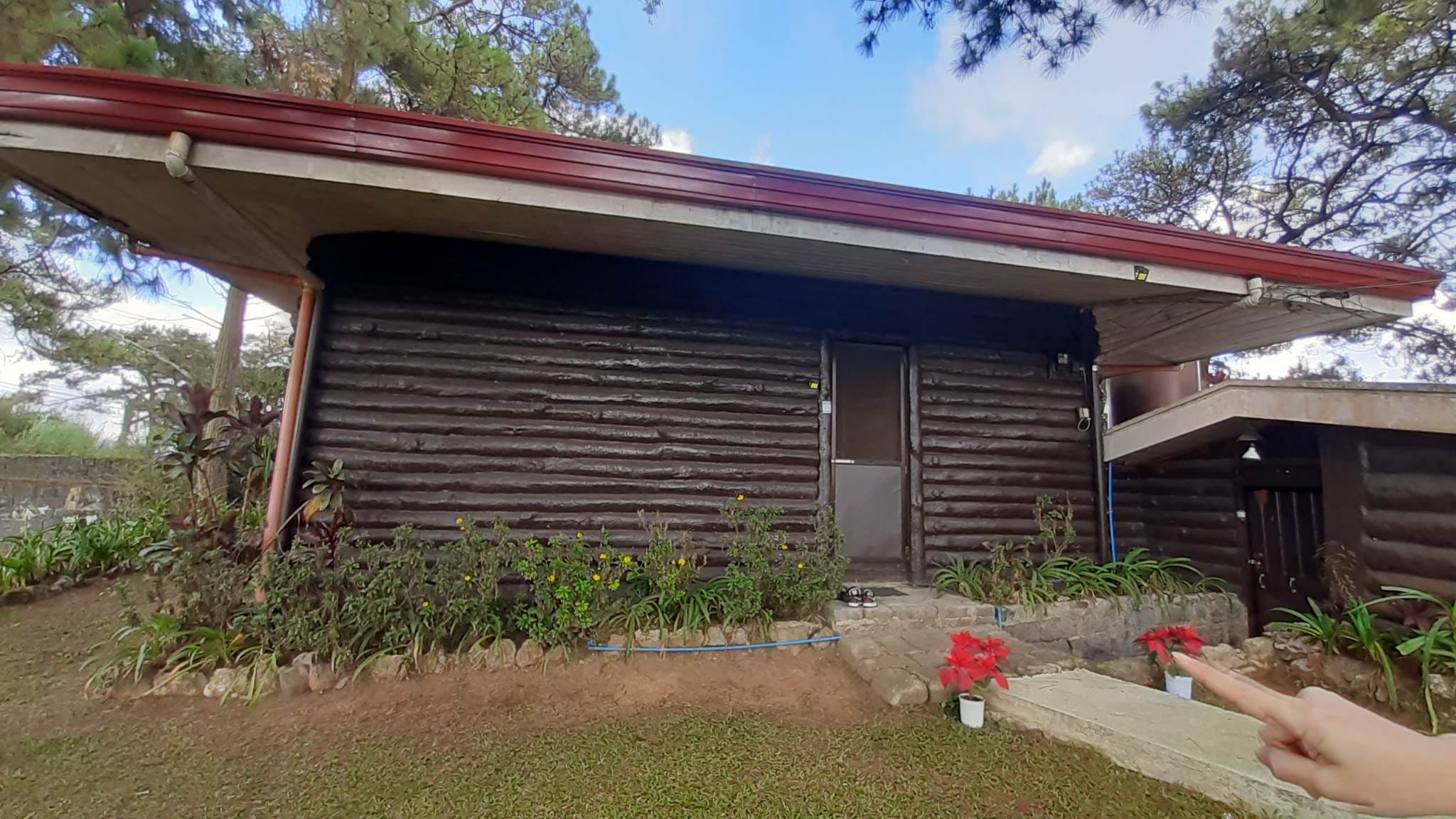
Traveling and traveling,
I arrived at the mountain of treasures,
Only to realize it was none other than
My own temporary dwelling.
–Ryokan
The Story Behind “Zen and Christianity”
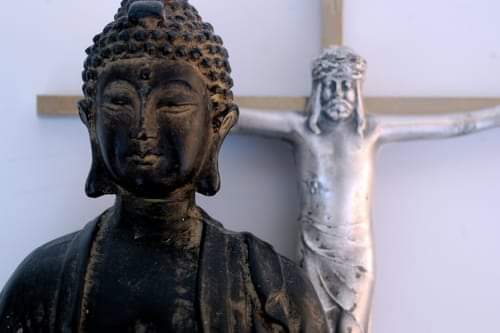
Without Buddha, I could not be a Christian.
PAUL KNITTER
Unbeknownst to many of us the reflections and insights of the article Zen and Christianity: Points of Convergence was born out of many years of struggle in reconciling my Christian faith with my Zen practice. At the suggestion of our Zen teacher, Sr. Sonia Punzalan Roshi, I am writing a short autobiographical account of my Zen journey to properly situate what I’ve written about.
It all started when I was 14 years old, while praying the rosary with my family. Up to that time, I was just an ordinary teenager, not a particularly religious or spiritual person. All of a sudden, on that fateful night, I was overwhelmed by an unconditional and boundless love, which left me with copious tears of joy. I took that as an encounter with the personal, ever-pervading and infinite love of God. That started me on the spiritual journey.
Fast forward to five or six years later. By a series of fortuitous events—first , by reading Thomas Merton’s Zen and the Birds of Appetite, and, secondly, by becoming a Zen student of Sr. Elaine Macinnes Roshi—I started Zen practice when I was a college student. I was fortunate to start Zen practice at such a young age. But my Zen journey was full of ups and downs, as I navigated through the challenges of life; first, as a university student; then, as a young professional trying to establish myself in my career.
For the next 21 years, I was practicing mostly by myself, until I realized that I probably needed to go to a Zen retreat to jumpstart my Zen practice. Fortunately, an invitation to attend a Zen retreat fell on my desk. It was a one-week retreat to be conducted by Sr. Sonia Punzalan Roshi in March of 1999.
The long and short of it is during that Zen retreat I had an experience of our True Self, which was confirmed seven months later by the Japanese Zen Master Kubota Jiun Roshi as kensho, that is, a Zen enlightenment experience. I have written about this experience elsewhere. Part of it reads:
By the fourth day, I was achieving a certain level of stillness and depth during our meditation sessions. During our morning break, as I was holding a piece of biscuit in the dining room, something out of the ordinary happened to me.
In an instant, the world as I knew it was turned upside down! The boundaries between me and the rest of the world disappeared! There was no time and space, no I and you, no inside and outside! I had a glimpse of the world of Zen. I could only describe it as a thunder-and-lightning realization that the universe is a palpable Whole!
Touching a piece of biscuit,
Heaven and earth are recreated.
Sipping a cup of coffee,
Whole rivers are swallowed in a single gulp.
Emptied of notions of “self” and “other,”
In a flash, the True Self revealed!
I have to admit that it was such a wondrous experience, which left me astonished, as I wasn’t expecting it at all. But I also began to have some questions.
For one thing, I started to compare my Christian experience of God’s presence and love with the Zen experience of the Oneness and Wholeness of our True Self. The former had a personal flavor, while the latter was impersonal. But both experiences were quite powerful. Which was true, I asked myself? Am I intellectually dishonest in remaining as a Christian after I had my Zen experience? Should I now renounce my Christian faith to become a Zen Buddhist? The struggle to reconcile these two experiences has become a metaphor of my struggle to reconcile my Christian faith with my Zen practice.
The first thing I did was try to resolve my dilemma intellectually. I read books, mostly theological and philosophical in nature, and one author, James Arraj, a Christian theologian and Zen practitioner, was really a big help. We corresponded through email for a year. He was patient and kind enough to respond to my queries. In short, his books and our email conversations allayed my fears, especially the fear of compromising my intellectual integrity, as I felt at that time I should choose to be either a Christian or a Zen Buddhist. He showed me on the theological and philosophical level that it is possible to remain a Christian while being engaged in Zen practice. But that was only the start. To resolve my dilemma, I felt that I needed more than linear thinking and conceptual ideas.
Dogen Zenji talks about genjokoans. Genjokoans are koans that arise from the personal circumstances of one’s life. My struggle to reconcile my Christian faith with my Zen practice has become my genjokoan for many years. And just like koans assigned to us by our Zen teachers, genjokoans are resolved by holding together the polarities, contradictions and paradoxes of life in quiet contemplation. Although intellectual study and academic discussion has its place and could be of some help, in the end, it is only by confronting such dilemmas in an experiential manner that we can find a satisfactory resolution to life’s struggles.
Probably this is also what the mathematician, G. Spencer Brown, meant when he wrote:
To arrive at the simplest truth… requires years of contemplation. Not activity. Not reasoning. Not calculating. Not busy behavior of any kind. Not reading. Not talking. Not making an effort. Not thinking. Simply bearing in mind what it is one needs to know.
In the end, what I finally realized, after many years of struggle, is that the two most significant spiritual experiences of my life are just different facets of the same experience. Like the two sides of the same coin, they’re just two aspects of the same reality. Indeed, IT is One!
–Matt
Zen and Christianity: Points of Convergence (Part II)

Koans and the Bible
Koans are stories, usually of encounter-dialogues between the great Zen Masters and their disciples. Often couched in paradoxical language, they appear nonsensical to most people. However, for those who have realized their import, koans point to the awake world that the Buddha, the Patriarchs and the great Zen Masters experienced.
These are some examples of koans assigned by Zen Masters to their students:
Mu (Nothing).
or
What is your original face before your parents were born?
or
What is the sound of one hand?
To think that Zen Masters expect their students to come up with conceptual answers to these koans is to miss the point. What then do Zen Masters expect from their students who sit with these koans? A contemporary Zen teacher, John Daido Loori, puts it this way:
In order to see into a koan we must go beyond the words and ideas that describe reality and directly and intimately experience reality itself. The answer to a koan is not a fixed piece of information. It is one’s own intimate and direct experience of the universe and its infinite facets. It is a state of consciousness.
To put it simply: working with koans is not about coming up with intellectual concepts; it is about direct experience of reality without the mediation of thoughts, ideas or images. Such an experience is referred to as kensho, which literally means “seeing into one’s true nature.”
Is there any equivalent to koans in Christianity? Personally, I’d like to think that the book par excellence of koans in Christianity is the Bible. I also consider the authors of the New Testament, especially St. John and St. Paul, as great koan-makers. And my intuitions were confirmed by Fr. Heinrich Dumoulin, who is well known for his scholarly books on the history of Zen Buddhism. He writes:
The Irish Jesuit William Johnston first, as far as I know, discovered the Christian koan. He saw difficulty, if not danger, for the Christian practitioner in the Zen koan, since it leads deep into the “Buddhist cosmos”: “The person who solves the koans one by one… can fairly claim to have imbibed the essentials of Buddhism, to have seen into the essence of things, and be living the life of the Buddha.” This insight aroused disquiet among Christian meditation leaders, even though for the most part practitioners fully absorbed in their koan scarcely notice the predominantly Buddhist content of the examples.
Johnston’s reflections were intensified by the sense that the Christian tradition, too, must embody this movement from the concentrated anxiety and contradiction of human existence to a spiritually satisfying solution. The natural place to look was the biblical heritage. “I see it [the koan] as a help to the understanding of our Christian Scriptures and as a guide to meditation based upon biblical paradox.” He finds Paul, especially, to be “one of the great koan-masters of all time.” The Bible indeed offers an abundance of koan material.
Consider these biblically-based koans:
The Father and I are one.
or
I am the vine; you are the branches.
or
You are the Body of Christ.
There is a place for academic study and intellectual discussion in our reading of the Bible. But that is not what the authors of the New Testament were concerned about. The words of Scripture, to borrow a phrase from a Zen saying, are just “fingers pointing to the moon.” What they want for us is to go beyond the words, and experience the reality that the words are pointing to. And to do so is to come to enlightenment. No wonder a Buddhist monk once remarked that Christians would get enlightenment if only they knew how to read their own Scriptures.
God and Enlightenment
The Buddha says:
Verily, there is the unborn, the unarisen, the unmade, the uncomposed. Were it not for this unborn, unarisen, unmade, uncomposed, escape from this world of the born, the arisen, the made, the composed would not be possible.
As a Christian, I could easily interpret these words as referring to God. But the Zen Buddhist will deny the existence of such a God and he will say that there is nothing resembling God in his meditation. This is not surprising, since Buddhism is basically a non-theistic spiritual tradition.
Fortunately, Zen Buddhism is more of a spiritual practice than a philosophy or religion. So, for us, Christians, who want to engage in Zen practice, there is no need to let go of what is at the heart of our Christian faith, that is, our belief in God. In fact, Thomas Merton says:
Is it therefore possible to say that both Christians and Buddhists can equally well practice Zen? Yes, if by Zen we mean precisely the quest for direct and pure experience on a metaphysical level, liberated from verbal formulas and linguistic preconceptions.
Zen Buddhism is essentially an experientially-oriented practice, centered on enlightenment. And, nowadays, many Christians are engaged in Zen practice to be enlightened, to partake of the Buddha’s enlightenment experience when he sat under the Bo tree.
An argument can be made that the enlightenment experience can be interpreted as an experience of God. This is what James Arraj, a Christian theologian and Zen practitioner, states:
In a very profound way it is possible to say that Zen is about God, or more precisely, it is, indeed, a mystical experience of God, and this is saying a great deal, for then it becomes clear why Christians can and have embraced Zen so deeply.
By contrast, Christian theology since the Middle Ages has become over-analytical and too rational, leaving no room for paradox and mystery. This has resulted in a Christianity that is too intellectual, legalistic, formal and rigid—and for the most part irrelevant to the contemporary person. What the 21st century man or woman wants is a direct encounter with God. And Zen practice, for many Christians, has been a way to directly experience the Divine.
Exploring the Face of Christ
For Christians, the encounter with Zen Buddhism has deepened their life of prayer and contemplation, helped them come to a renewed understanding and appreciation of their own Scriptures, and opened a pathway to a direct experience of the Divine. Above all, it has enabled them to explore the face of Christ in a way that they haven’t done before. In the words of Fr. William Johnston:
I love that passage from Second Corinthians when Paul speaks of the glory of God in the face of Moses and the glory of God in the face of Jesus. What radiant brightness and divine power is there! And do we little Westerners think we have seen all that glory? Do we claim to have exhausted all that beauty? Do we imagine we have explored all that wisdom? Far from it. In the face of Christ are myriads of contours yet to be explored; his voice speaks in rich and vibrant tones that Western ears have never heard; his eyes are pools of wisdom the Western gaze has never fathomed. And now it is the hour of the East to explore all this beauty and find what the West has missed. What an exciting adventure!
As we draw to a close, please allow me to share this beautiful and inspiring story:
In Hokkaido, the northern island of Japan, there is a small Zen monastery where the master is illiterate. The teacher was a farmer’s son and he had been taken to the temple when he was very young. He had never learned to read or write but he completed the koan study and came to complete enlightenment.
That there were other religions except Buddhism he scarcely realized, until he heard the monks discussing Christianity.
One of his monks had been to the University of Tokyo and the teacher asked him to explain Christianity.
“I don’t know much about it,” the monk said, “but I will bring you the holy book of the Christian religion.”
The master sent the monk to the nearest city and the monk returned with the Bible.
“That’s a thick book,” the master said, “and I can’t read. But you can read something to me.”
The monk knew the Bible and read the Sermon on the Mount. The more he read, the more the master was impressed. “That is beautiful,” he kept saying. “That is very beautiful.” When the monk finished reading the sermon, the master said nothing for a while. The silence lasted so long that the monk put the Bible down, got himself into the lotus position, and started meditating. “Yes,” the teacher said finally. “I don’t know who wrote that, but whoever he was, he was either a Buddha or a Bodhisattva. What you read there is the essence of everything I have been trying to teach you here.”
–Matt
Zen and Christianity: Points of Convergence (Part I)
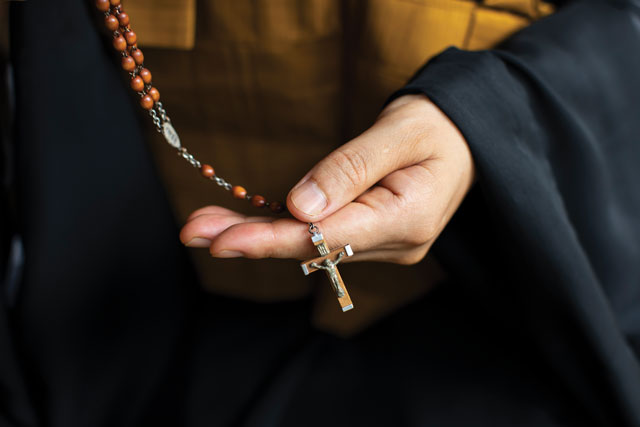
Is it therefore possible to say that both Christians and Buddhists can equally well practice Zen? Yes, if by Zen we mean precisely the quest for direct and pure experience on a metaphysical level, liberated from verbal formulas and linguistic preconceptions.
THOMAS MERTON
Ours is the wealthiest and the most technologically-advanced society since the dawn of civilization. Yet, despite the abundance of our material possessions, and the plethora of gadgets and devices we have, we live in a time where many people are unhappy. Driven by a hunger for meaning, many have turned to the East, among them many Christians—including priests, nuns, seminarians, and pastors. They have sat at the feet of gurus, swamis and roshis in search of enlightenment and wisdom. Fr. H. M. Enomiya-Lasalle puts it this way:
Since the time of Marco Polo, Europeans of every generation have become intrigued with the Far East. Many of them, despite the danger and difficulties of the trip, have ventured to go there. It is only recently, however, that Westerners have traveled to the East to seek solutions to their religious problems. Christians, too, have been part of this group. Their pilgrimage has had as its purpose the learning of ways of Oriental meditation such as Yoga and Zen and the integration of this in their spiritual life.
Every religion has as its general direction some kind of “ultimate” or “last reality.” This goal is sometimes called “God” or “Absolute” or even “Nothing” or “Without Name.” In the words of Teilhard de Chardin, “All things that rise must converge.” Christians have found and are continuing to find that they can attempt Yoga and Zen without jeopardizing their own religion.
In this blog post, I would just like to share some of the things that Christians— myself included— have learned from the East, specifically from Zen Buddhism.
Christian Contemplation and Zen Meditation
Most Christians think only of prayer as thoughts or feelings expressed in words. But this is only one way of praying. Prayer that goes beyond thought is referred to in Christian spirituality as contemplation or contemplative prayer. Contemplation is the opening of mind and heart—our whole being—to God, the Ultimate Mystery, beyond thoughts, words, and emotions. Such a form of prayer dates back to at least the 3rd century, among the Desert Fathers.
One of the earliest expressions of contemplative prayer is found in the 6th century work of an anonymous Syrian monk (referred to by scholars as Pseudo-Dionysius the Areopagite), entitled Mystical Theology. He writes:
In the earnest practice of mystical contemplation, do thou leave behind the senses and the working of the intellect, and all things that the senses and intellect can perceive, and all things which are not and all things that are, and strain upwards in unknowing, as far as may be, to union with Him who is above all things and above all knowledge. For by constant and absolute withdrawal from thyself and all things in purity, abandoning all and set free from all, thou shalt be carried up to the ray of Divine darkness that surpasseth all being.
Similar passages can be found in the works of the great Christian contemplatives and mystics, like Meister Eckhart, the anonymous author of The Cloud of Unknowing, St. John of the Cross and St. Teresa of Avila.
The 20th century Benedictine monk and contemplative, Fr. John Main describes contemplative prayer in this manner:
In meditation we are not thinking or imagining about God at all. In meditation we seek to do something immeasurably greater; we seek to be with God, to be with Jesus, to be with his Holy Spirit. In meditation we go beyond thoughts, even holy thoughts. Meditation is concerned not with thinking but with being. Our aim in Christian prayer is to allow God’s mysterious and silent presence within us to become the reality which gives meaning, shape and purpose to everything we do – to everything we are. The task of meditation, therefore, is to bring our distracted mind to stillness, silence and concentration…
Meditation, also known as contemplative prayer, is the prayer of silence, the place where direct contact with Christ can occur, once the never ceasing activity of the mind has been stilled. In meditation we go beyond words, thoughts, and images into the presence of God within.
It doesn’t take much to realize how similar these passages are to the teachings of Zen Masters on Zen meditation. In the Fukanzazengi, Zen Master Dogen writes:
Now sit steadfastly and think not-thinking. How do you think not-thinking? Beyond thinking. This is the essential art of zazen.
In this teaching lies the heart of Zen meditation. This simply means not to be caught by thought, neither chasing after it nor resisting it. In other words, when thoughts come, let them come and let them go. As Sr. Sonia Punzalan Roshi, our Zen teacher, says:
In the practice, we let thoughts be, as they arise, allow them to just pass by, as it is the nature of all things to come and go.
Because of the striking parallels between Zen meditation and contemplative prayer, many Christians have found that Zen meditation is one way of deepening the practice of contemplative prayer. To my mind, this is what Fr. William Johnston, Jesuit missionary in Japan and pioneer in the Zen-Christian dialogue, discovered during his first Zen retreat. This is a description of his experience:
“How are you getting on?”
“My legs are aching so much that I can scarcely bear it any longer.”
“Stretch them out! Stretch them out! I’ll tell the young man in the meditation hall not to bother you. If the thing is too painful, you’ll simply give it up. And I don’t want you to give it up, I want you to continue. So don’t overdo it. But tell me, what about your Zen? What are you doing?”
“I’m doing what you, I suppose, would call ‘gedo Zen.’”
“Very good! Very good! Many Christians do that. But what precisely do you mean by ‘gedo Zen?’”
“I mean I am sitting silently in the presence of God without words or thoughts or images or ideas.”
“Your God is everywhere?”
“Yes.”
“And you are wrapped around in God?”
“Yes.”
“And you experience this?”
“Yes.”
“Very good! Very good! Continue this way. Just keep on. And eventually you will find that God will disappear and only Johnston San will remain.”
This remark shocked me. It sounded like a denial of all that I considered sacred, of all that lay at the very center of my so-called Zen. One should not, I suppose, contradict the roshi, but nevertheless I did so. Recalling the teaching of The Cloud [of Unknowing] that there are mystical moments when self totally disappears and only God remains, I said with a smile, “God will not disappear. But Johnston might well disappear and only God be left.”
“Yes, yes,” he answered smilingly. “It’s the same thing. That is what I mean.”
Yet, as I have said, his seemingly radical denial of God was a shock to me. But afterward, reflecting on the whole matter and discussing it with my friends, I came to the conclusion that his words didn’t necessarily deny the existence of God at all. Underlying them is a denial of dualism and an approach to God which is different from that of the traditional West. Now I maintain that this way of speaking throws light on the very notion of God, helping Western Christians to purify and clarify their ideas.
(To be continued.)
–Matt
The Empty Space
[C]hrist emptied himself, taking the form of a slave, being born in human likeness…
PHILIPPIANS 2:7
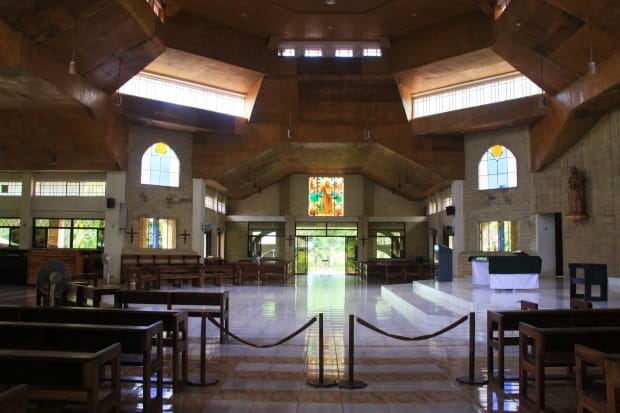
Many years ago, I lived with the Trappists, one of the most austere contemplative religious orders in the Catholic church, to discern a possible vocation to monastic life. One of the unusual features of Trappist architecture is that there is a wide, empty space at the central part of the monastic church. Frankly, I thought that it was an awful waste of space. Perplexed by this distinctive feature of Trappist architecture, I asked the abbot about it. Responding to my query, the abbot said:
When we come before God’s presence we have to empty ourselves of our self-centered motivations and selfish desires. That’s what the empty space in the church is all about.
Authentic spirituality is always about letting go of the ego, because we can’t truly love if we are self-centered and full of ourselves. This, in turn, reminded me of the self-emptying love of Christ:
Let the same mind be in you that was in Christ Jesus, who, though he was in the form of God, did not regard equality with God as something to be exploited, but emptied himself, taking the form of a slave, being born in human likeness. And being found in human form, humbled himself and became obedient to the point of death—even death on a cross.
PHILIPPIANS 2:6-8
No wonder the Japanese Zen master, Yamada Koun Roshi, said to one of his Christian disciples, Fr. Robert Kennedy, a Jesuit priest, who later also became a Zen master:
I do not want to make you a Buddhist. I want to empty you in imitation of your Lord Jesus Christ who emptied himself and poured himself out.
Fr. Robert Kennedy reflects:
I remember thinking then, ‘This Buddhist might make a Christian of me yet.’ It was so profoundly Christian and beautiful.
–Matt
The Power of Samadhi
When even for a moment you sit upright in samadhi… the whole world of phenomena becomes the Buddha’s mudra and the entire sky turns into enlightenment…
ZEN MASTER DOGEN
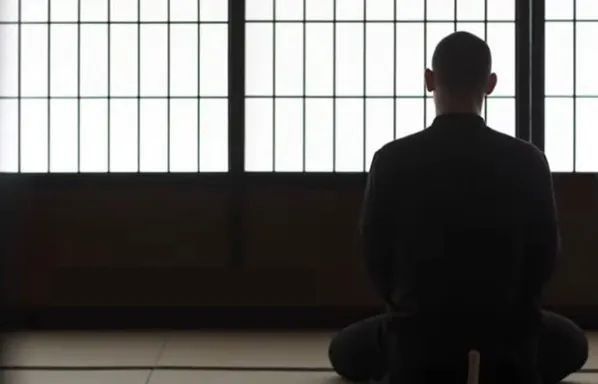
When I was starting out in my Zen practice many years ago, there was not much talk about samadhi. I guess, this is the experience, too, of some Zen practitioners. However, in other lineages, like Rinzai Zen, there is a body of teaching regarding this matter. Zen masters say that to strengthen our mental concentration and realize our True Self we need to develop our capacity for samadhi. In the words of the Rinzai Zen master, Meido Moore Roshi: “Samadhi cultivation is the foundation of Zen training.” This made sense to me. By the way, samadhi is simply meditative absorption or one-pointedness.
For our efforts to be effective in developing this important aspect of our practice, Zen masters emphasize three things:
▪ Settle the body.
▪ Settle the breath.
▪ Settle the mind.
Settle the Body
To settle the body simply means to take a posture where the spine is properly aligned, with the back erect, and with an attitude that is relaxed yet alert. The Three Pillars of Zen is one of the first English Zen books that came out which emphasized the need for practice. Written in 1965, it is now a Zen classic. Philip Kapleau Roshi, the editor of the book, writes:
We can now consider in fuller detail the reasons why Zen masters have always stressed an erect back… It is well known that a bent back deprives the mind of its tension so that it is quickly invaded by random thoughts and images, but that a straight back, by strengthening concentration, lessens the incidence of wandering thoughts and thus hastens samadhi. Conversely, when the mind becomes free of ideas the back tends to straighten itself without conscious effort.
Through a sagging spine and the consequent multiplication of thoughts, harmonious breathing often becomes superseded by quickened or jerky breathing, depending on the nature of the thoughts. This soon reflects itself in nervous and muscular tensions. In these lectures Yasutani Roshi also points out how a slouching back saps the mind’s vigor and clarity, inducing dullness and boredom.
Settle the Breath
We are now at the heart of matter. In Eastern spirituality, the breath plays an important role in meditation practice. A Zen teacher puts it this way:
Breath is life. The word spirit means breath. The words ki in Japanese and chi in Chinese, meaning power or energy, both derive from breath. Breath is the key to zazen. It is the vital force in our bodies. In zazen you will discover how breathing and posture are closely allied to your emotions…
In working with the breath you are automatically working with the body and mind. Body, breath, and mind are one reality. We tend to see them separately, but in zazen they unify and we experience their interpenetration directly. In sitting and in daily life, try to return to an open, balanced posture and full, even breathing. As you recognize and consciously influence your posture and breathing patterns, you will discover within yourself more patience, calm, and emotional stability. Such equanimity is an asset that imparts tremendous strength.
To cultivate the vital force of breath, Zen masters teach a variety of breathing techniques. I would like to share the most basic form of breathing exercise, which is breathing from the abdomen or from the tanden. Most of us breathe only from the lungs, which is a shallow form of breathing. To learn to breathe from the tanden follow these simple instructions:
- Lie flat on your back.
- Place your hand (either left or right hand) on your abdomen.
- As you breathe in, allow your breath to reach your abdomen. You will know that you are breathing from the tanden, if your hand rises with your abdomen as you breathe in.
- As you breathe out, let your hand fall together with your abdomen.
- Do this daily for at least ten minutes.
As soon as you get the hang of it, you can incorporate this style of breathing from the tanden when you meditate.
By the way, be gentle with yourself. Don’t try to force anything. For myself I follow these suggestions:
Breathe softly. Do not overfill or empty the lungs to the point of strain, nor hold your breath. The inhalations should be effortless. Just let go, and your lungs will naturally refill by themselves. Deep, natural breathing can’t be forced. It occurs spontaneously once you take the right posture, positioning your body properly.
At the start, moments of samadhi will be few and far between. But don’t be discouraged. Eventually, there will be more and more moments of samadhi. As your capacity for samadhi grows, you will find your concentration strengthening, too. Paradoxically, though, when conditions are ripe, the state of samadhi shatters, usually through a sight or a sound. This is what happened to Zen master Reiun when he saw the peach blossoms fall and to Hakuin Zenji when he heard the sound of the temple bell. When this occurs, your habit of dualistic seeing momentarily drops. That is the moment when your True Self springs forth.
Such a moment could be as gentle as the soft caress of the breeze in your face, or as dramatic as a flash of lightning on a stormy day. No matter how it happens, it will be a watershed event in your spiritual practice. Yamada Koun Roshi says:
You will feel as though the whole universe has totally collapsed. Strange as it may seem, this experience has the power to free you from the agonies of the world. It emancipates you from anxiety over all worldly suffering. You feel as though the heavy burdens you have been carrying in mind and body have suddenly fallen away. It is a great surprise. The joy and happiness at that time are beyond all words, and there are no philosophies or theories attached to it. This is the enlightenment, the satori of Zen.
Settle the Mind
To settle your mind means to be one with your practice, whether it is breath-counting, following the breath, practicing with the koan Mu or simply just sitting.
Speaking of breath-counting, in Rinzai Zen circles, breath-counting is assigned by the Zen teacher for a significant period of time, to develop the student’s capacity for samadhi. The Zen teacher will only assign the student’s first koan, usually the koan Mu, once they are able to ascertain that the student has developed a certain degree of samadhi. During private interviews, Rinzai Zen masters, from time to time, would ask their students: “Show me how you breathe!” I would surmise that they have a way of discerning a student’s level of samadhi by the way they breathe.
To digress a bit, normally, when we are resting we breathe about 15 breaths a minute. But, in deep samadhi, we breathe at the rate of only two or three breaths a minute. What this means is that we come to a place of deep rest and stillness in deep meditation. And we don’t experience this even when we’re sleeping.
Now back to breath-counting. To think that breath-counting is only an exercise for beginners is a misconception, as shown by accounts of Zen practitioners who came to awakening through breath-counting. Advanced students, too, especially those who have finished their koan study, usually go back to breath-counting.
For those who are practicing with the koan Mu, these pointers from Yamada Koun Roshi are vital:
What does Mu mean?
This is the point of the koan. If you try to find any special meaning in Mu, you miss Joshu and you’ll never meet him. You’ll never be able to pass through the barrier of Mu. So what should be done? That is the question! Zen practitioners must try to find the answer by themselves and present it to the roshi. In almost all Japanese zendo, the explanation of Mu will stop at this point. However, I’ll tell you this: Mu has no meaning whatsoever. If you want to solve the problem of Mu, you must become one with it! You must forget yourself in working on it. Your consciousness must be completely absorbed in your practice of Mu.
As one Zen master said when he was asked about the essence of his teaching: “You must die!” Indeed, Mu is the sword that kills and gives life!
Now for the practical matter of dealing with wandering thoughts. If I’m not mistaken, when Zen master Dogen came back from China, one of the first things he wrote was Fukanzazenji (“Recommending Zazen to All People”). Part of that essay reads:
Now sit steadfastly and think not-thinking. How do you think not-thinking? Beyond thinking. This is the essential art of zazen.
These are enigmatic words. But herein lies the essence of our practice. What does it mean? Simply this: Not to be caught by thought, neither chasing after it nor resisting it. In other words, when thoughts come, let them come and go. Which reminds me of what Zen master Nansen said:
The Way does not belong to knowing or not-knowing. Knowing is delusion; not-knowing is a blank consciousness.
And to borrow an image used frequently by one of the Zen masters, it is the process of “opening the hand of thought.”
Before I forget, I just like to point out that the Zen masters emphasize putting our attention on the hara. By the way, the hara is two or three finger breadths below the navel. It is the physical center of the body, as well as its center of gravity. In Zen, it is considered to be the spiritual center of the body. And it is recommended that we put our attention there when we meditate.
Zen teachers say that when our attention is centered on the hara, random ideas and images are diminished and the attainment of one-pointedness is accelerated. This in turn leads to a greater degree of mental and emotional stability. Thus, one who functions from the hara is not easily disturbed. That is why Harada Sogaku Roshi often exhorted his students: “You must realize”—that is, make real—“that the center of the universe is the pit of your belly!”
“Practice just to practice.”
I hope at least some of us will find some of the things I shared helpful. But if you find that it doesn’t resonate with you, please disregard it. What’s important is to meditate and to meditate wholeheartedly. In the words of Shunryu Suzuki Roshi: “When you do something, you should burn yourself completely, like a good bonfire, leaving no trace of yourself.” Or, in the words of another Zen teacher: “Practice just to practice.”
–Matt


 MattAndJojang's Blog